Wayward Toy Theatre: 4 Robots in 2 Months?!
Physical AI is a term that’s thrown about more recently as an attempt, most likely, to further hone in on the differences between robots’ past and present capabilities. There is quite a difference! Indeed, with the capacity to train without saturating such vast amounts of data, not only is it possible to get robots to move like humans, it is possible to get them to complete useful tasks, learning on the way how to navigate the world.
Companies like Figure AI intend to take full advantage of this for industries such as manufacturing or warehouse work, but this project asked a different question: what does physical AI look like when the goal is to feel alive?
You may have seen robots dancing, airboxing and doing flips, but not only are they all humanoids, they are also non-interactive. I was recruited by a group that had visions of becoming the Figure-AI of robotic entertainment, creating a new genre of live characters Disney had pushed hard in the past to create. Getting robots of various forms to interact with the world with only one task in mind: feeling alive.
How did such an effort turn out? See for yourself: 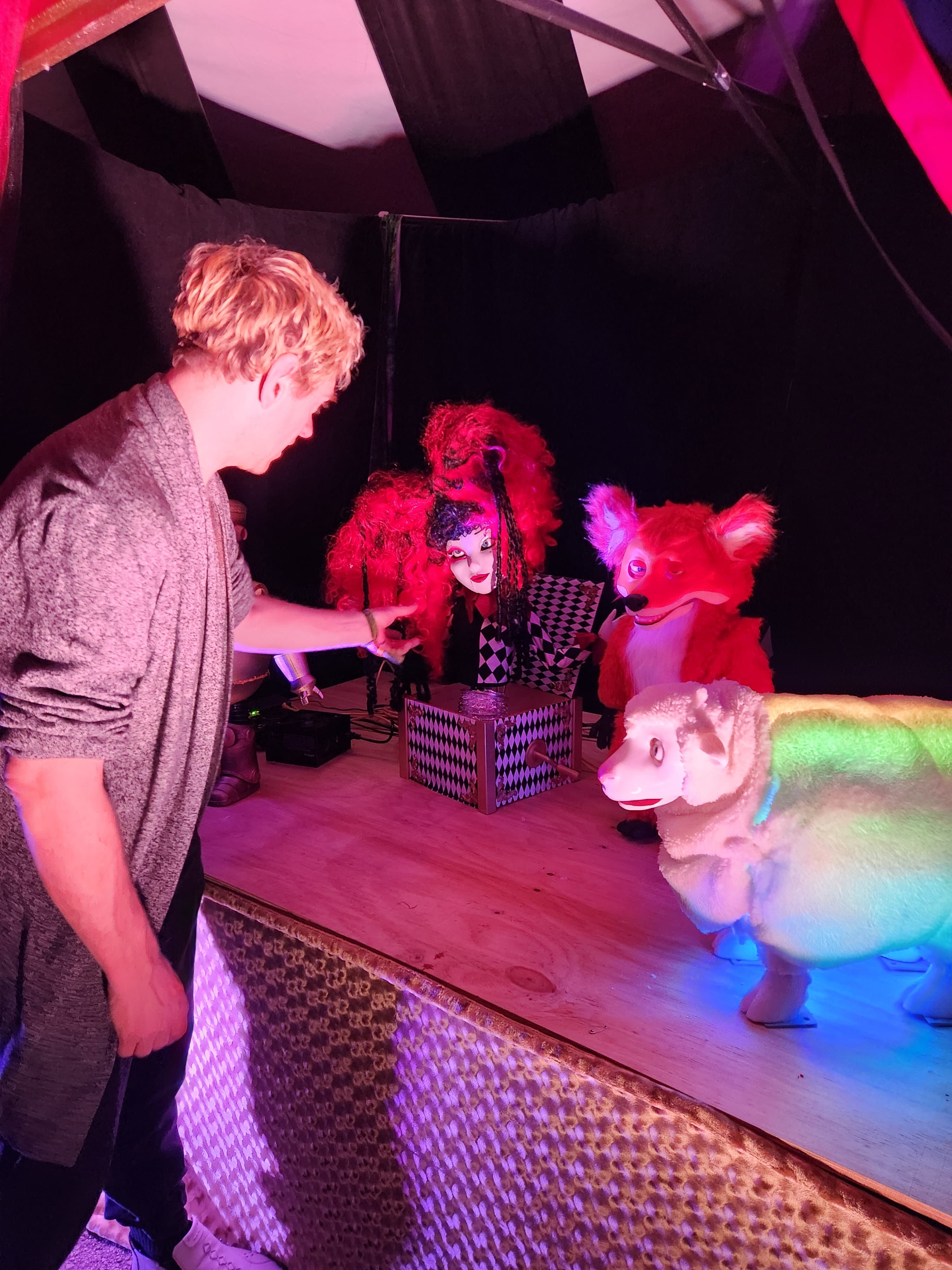
In November, I was reached out to about a challenge to build 4 anatomically unique animatronics with the expressed intent they would be embodied by current AI innovations. Not only would they be able to speak and interact with individuals verbally, they would also be able to animate and move in accordance with their own lines and intents. The group needed someone capable of enabling the various movements they needed for expressivity, alongside a frame for electronics to be housed and dressing to be placed onto. Essentially, they needed someone to model and map out, with constraints and expressive capacity in mind, four anatomically unique robots.
This was incredibly ambitious with the timeline we were provided, and as the sole full time in-person engineer, it took tremendous grit, creativity, and blazingly fast prototyping and fabrication capacity to meet expectations. And I must say, for my first time creating robots, I don’t think I did too badly:
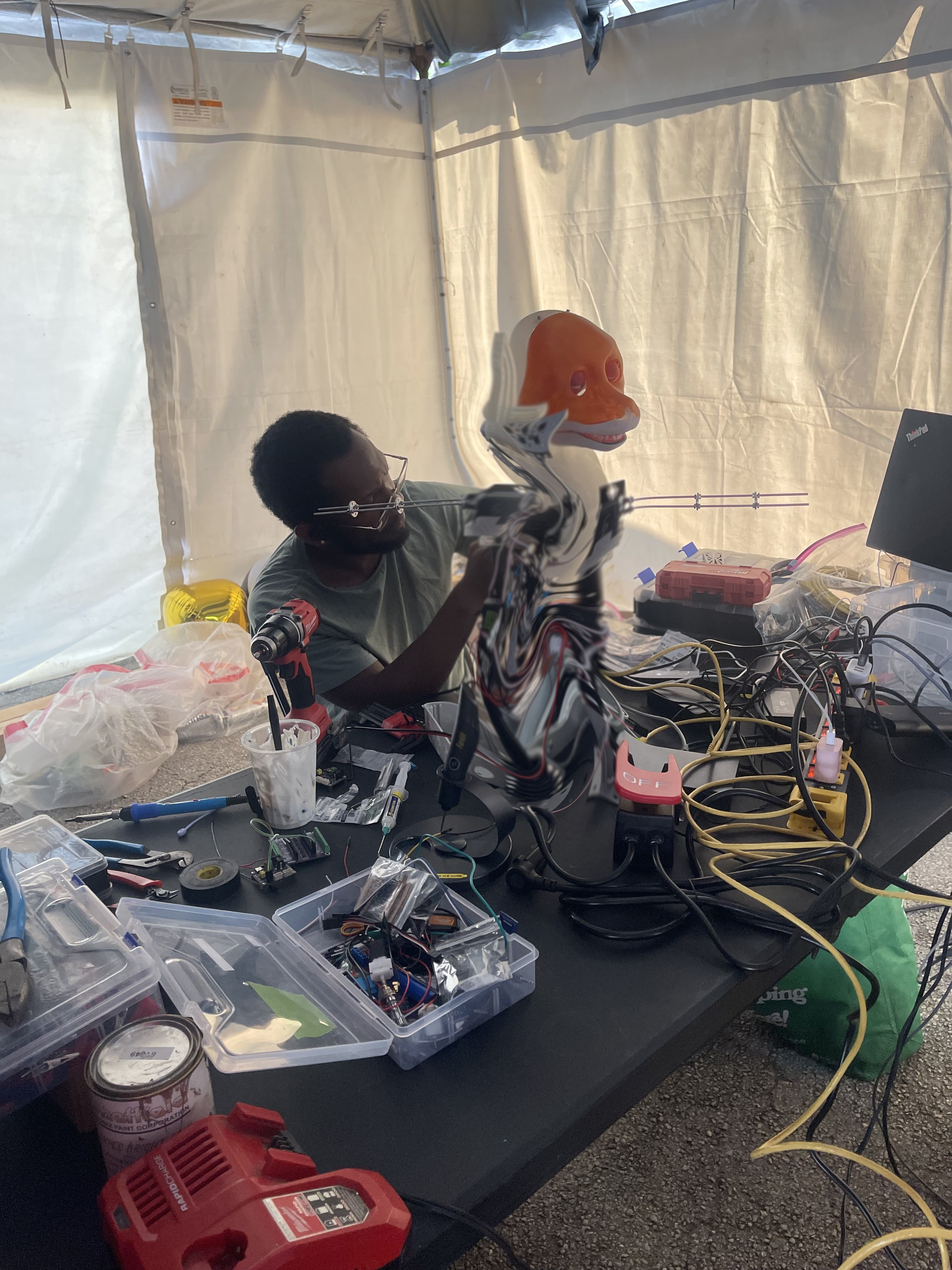
Much of December was spent designing the armatures, finalizing expectations and resources, and making purchasing orders for physical assembly. And for the final month of January, each robot were built, tested, and successfully shown off at a private event, live for all to view and interact with. With the software and hardware complete, the last week was spent rapidly creating dressing material, and off the robots went, from NYC to Miami Beach.
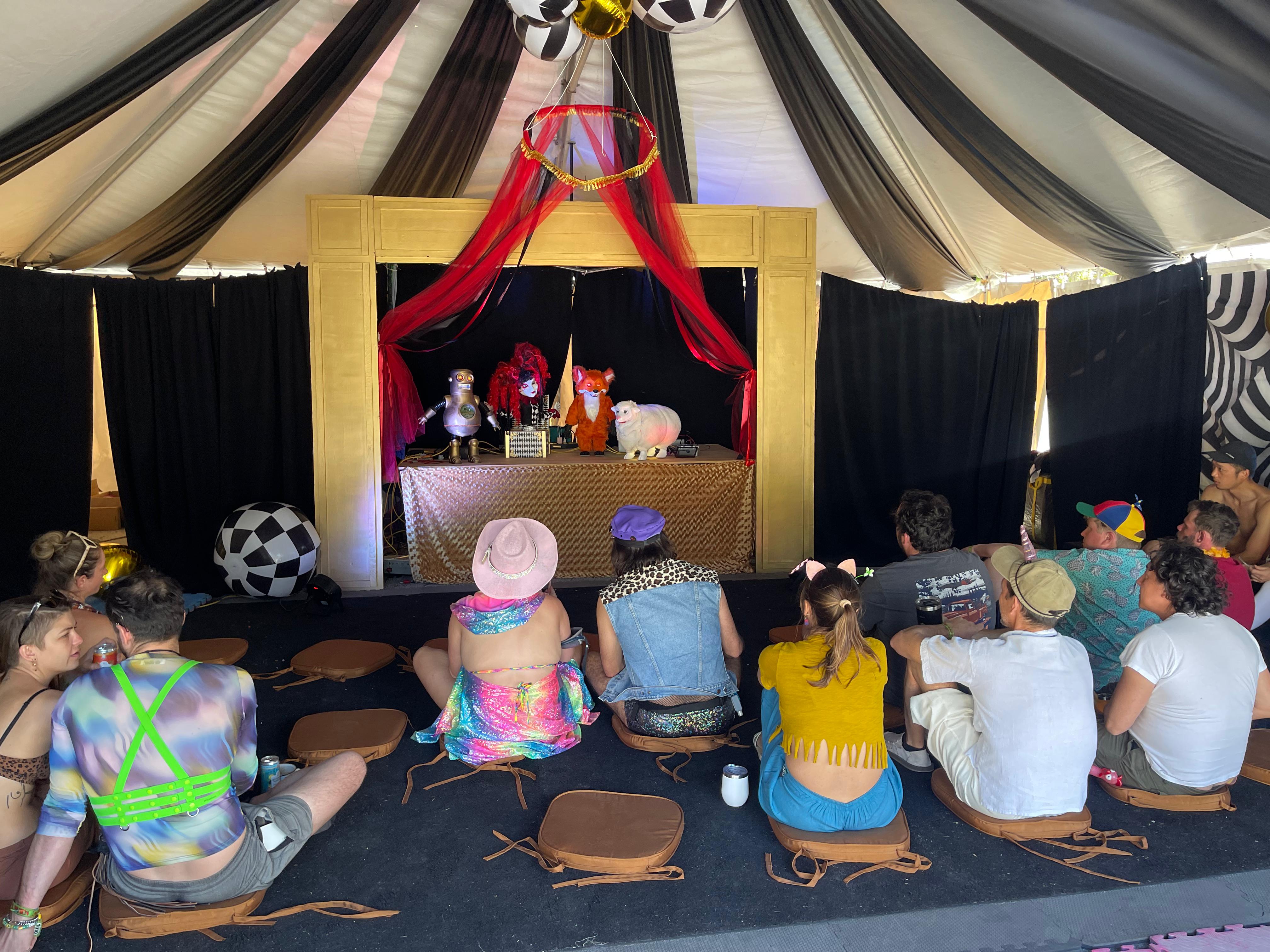
Packing the beautifully decorated tent at LoveBurn 2026, we presented an interactive show where the audience helped us create unique stories and memories; each character providing audible and physical exaggerated acting capable of entertaining scores for countless shows.
Ulitimately, with signficant effort, I, and a team of others, were able to achieve the impossible, and am very glad I was givent the opportunity. There were some physical kinks to work out, related to wiring and software veracity, but we were able to prove that individuals would watch animatronic plays generated and controlled exclusively by AI, that unique robots can be built with strict deadlines, and that AI can indeed be used in ways so unique they create a genre of their own in entertainment. I cannot wait to see where Fireside Creatives takes these works from here.
Thank you to Brandon and Kerri for the trust they placed in me, and to Karl, whose rapid-prototyping experience helped resolve critical challenges under pressure. I’m happy we were able to reach our goals for the Kickstarter
Additional technical details will be shared in the future, as permitted.